Showing posts sorted by date for query label:p3 math. Sort by relevance Show all posts

P3/P4 Math: Fitting Equal Quantities into Containers with Remainder

The following question requires basic division so as to find out how many containers can be fitted with equal quantities but there will be some remainder after performing the division.

Such questions are common in P4 exams in Section A or B.

Mrs Lim is planning an excursion for her 60 students.
She needs to ferry the students and herself to the Science Center.
A mini-bus can sit up to 12 people.

What is the least number of mini-buses needed 
to ferry the students and herself to the Science Center?

Typical 12-seater mini-bus

If the above question is easy, try to do the more challenging question below.

The question below will randomize with different numbers every hour. 
Copy below question down before making attempt.


Click if above box appears blank


P4 Math: 2 Different Items bought at different quantities (Multiples of one another)

2 different items are bought at different quantites and the cost of one of the item is a multiple of the other.

Such questions are common in P4 exams and students will need to draw models so as to represent the numerical values given.

Alice bought 5 pens and Karen bought 2 books.
Each book costs thrice as much as each pen.
Both girls spent $66 on the books and pens altogether.

How much did Alice spend on her 5 pens?


If the above question is easy, try to do the more challenging question below.

The question below will randomize with different numbers every hour. 
Copy below question down before making attempt.


Click if above box appears blank


P3/P4 Math: Area and Perimeter of Rectangles with missing Length

Area and perimeter of squares and rectangles are taught in P3 and P4.
Students will need to remember the formulas needed to calculate the areas and perimeters of rectangles using the "Length" and "Breadth".

For the following question type, the area or perimeter of the rectangle is already given together with the breadth. Students must find the missing "length" before attempting to solve for the perimeter or area of the rectangle.

A similar version of this question for "squares" can be found here.


The questions below will randomize with different numbers every hour. 
Copy below question(s) down before making attempt.


Click if above box appears blank


P3/P4 Math: Internal Transfer (Make Equal)

"Total unchanged", more commonly known as , "Internal Transfer", requires students to draw "before and after" comparison models in order to solve "visually"

Such questions usually appear in Section C of P3 and P4 exam papers.

Janice has 225 candy bars and Kenny has 99 candy bars.
How many candy bars must Janice give Kenny
so both will have the same number of candy bars?


If the above question is easy, try to do the more challenging question below.

The question below will randomize with different numbers every hour. 
Copy below question down before making attempt.


Click if above box appears blank

P3/P4 Math: Areas and Perimeters of Squares

Areas and Perimeters of shapes such as squares and rectangles are taught in P3 and P4.

Though the formula is easy to remember, this becomes more challenging when the length of a square is not given but with the perimeter or area, students are expected to find the other.

(if given perimeter of square, find area.)

A similar version of this question for "rectangles" can be found here.


If the above question is easy, try to do the more challenging question below.

The question below will randomize with different numbers every hour. 
Copy below question down before making attempt.


Click if above box appears blank


P3/P4 Math: Before and After Model (Reverse Model Drawing)

With problem sums getting more complex as student progresses from P3 to P4, it will be difficult for the students to read the question and be able to draw the models required.

Hence, the "Reverse Model Drawing" method.

This method allows them to see the models first, and use it to decipher the question being asked instead.

With this approach, the student get to see the models already drawn and use it to fill up the gaps in the question being asked.

Once students have sufficient practice, they will be able to read the question and draw the comparison models independently.


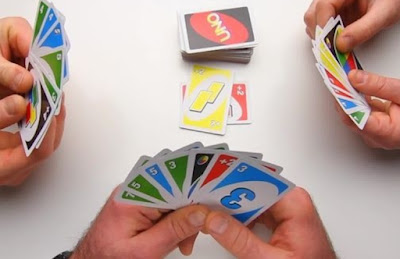
Uno Reverse Cards


The question below will randomize with different numbers every hour. 
Copy below question down before making attempt.


Click if above box appears blank

P3/P4 Math: Stacked Models ( Comparing multiples of 2 different items each with different values )

Such questions below will require students to be proficient with comparison model drawing..

A stacked model will be needed to solve question of this nature.

Such questions usually appear in Section C of P3 and P4 exams.


Franchesca bought 3 mangoes and 2 apples with $31 altogether.
Each mango costs $2 more than each apple.

How much does each apple cost?


If the above question is easy, try to do the more challenging question below.

The question below will randomize with different numbers every hour. 
Copy below question down before making attempt.


Click if above box appears blank

P3/P4 Math: Two Fractions of Total Given

Fraction problem sums are common in Section C of P3 and P4 exams.

A "fraction of the total" representing one item and another "fraction of the total" representing another item. 

The third information given is usually the value of the first item, second item or the amount left.

A slightly more complex version of this question can be found here.


Bala have some books.
1/3 of his books are about cars.
1/9 of the books are about planes.
The rest of the books are about dinosaurs.
He has 55 books about dinosaurs.

How many books does Bala have altogether?

A Stegosaurus from the Jurassic Period

If the above question is easy, try to do the more challenging question below.

The question below will randomize with different numbers every hour. 
Copy below question down before making attempt.


Click if above box appears blank

P3/P4 Math: Before and After (Constant Difference)

The following question type introduces the concept of constant difference to the P3 and P4 students and requires students to be able to solve by means of model drawing.

Such is a question that requires "Before and After" model drawing methods to visualize the concept of "Constant Difference".

These questions will appear in Section C of P3 and P4 exam papers.

Eric and Brady have the same number of goldfish in their aquariums.
After Eric added 5 goldfish and
Brady added 15 goldfish in their own aquariums,
Brady now has twice as many goldfish as Eric.

How many goldfish did they have altogether at first?


If the above question is easy, try to do the more challenging question below.

The question below will randomize with different numbers every hour. 
Copy below question down before making attempt.


Click if above box appears blank

P3/P4 Math: Set Method (Complete Sets without Remainders)

By the end of P3, students will be exposed to set method.

The basic components within 1 set will be given.

Such questions usually appear in from P3 SA2 and in P4 exam papers.

On a farm, there are ducks and pigs.
For every 1 pig, there are 3 ducks.
The ducks and pigs have a total of 80 legs.

How many pigs are there in this farm?


If the above question is easy, try to do the more challenging question below.

The question below will randomize with different numbers every hour. 
Copy below question down before making attempt.


Click if above box appears blank

P3/P4 Math: 3 Party Comparison Model Drawing ( within a same sentence )

Comparing 3 parties with 2 separate sentences is common in P3.

There are 13 more green than red ribbons.
There are 10 more blue than green ribbons.


In the later part of P3 and onto P4,
students are required to know how to draw comparison models with a single sentence such as one below.

Mark has 15 more cards than Reuben and 11 less cards than Bernard.
Who has the most and who has the least cards?


If the above question is easy, try to do the more challenging question below.

The question below will randomize with different numbers every hour. 
Copy below question down before making attempt.


Click if the above box appears blank

P3/P4 Math: Reverse Model Drawing

To assist P3 and P4 Math students with comparison model drawing,
such visual aids may be useful.

Instead of having them draw the model, 
have them fill in a partially drawn model first.

If the student is able to fill in all the missing boxes, the model should be able to instruct them on how to find the answer.


The options order above will randomize every hour.

Click if any of the above boxes appear blank

P3 Math: Before and After (Basic)

The question type introduces P3 students to the "before and after" concept.

Drawing of comparison models is absolutely necessary to demonstrate understanding and comprehension of the story.

One of the models will remain unchanged.

Such questions are of higher value and will be in Section C of P3 SA1 or SA2.

Steven have $97 more than Elise at first.
After Elise spent $12 to buy some snacks,
Steven still has twice as much money as her.
How much money did both have altogether at first?

If the above question is easy, try to do the more challenging question below.

The question below will randomize with different numbers every hour. 
Copy below question down before making attempt.


Click if above box appears blank

P3/P4 Math: Set Method (Equal Quantity)

The question below deals with "sets" with equal quantities of 2 items.
(each with different value)

Such questions are common for P3 SA2 and P4 SA1/SA2.


Patrick was given the equal number of $2 notes and $5 notes.
The $2 and $5 has a total value of $98.

How many $5 notes was he given?


If the above question is easy, try to do the more challenging question below.

The question below will randomize with different numbers every hour. 
Copy below question down before making attempt.


Click if above box appears blank

P3 Math: Part/Whole Models Practice ( Fill in the Blanks )

The following is a part/whole model drawing practice designed for students to improve their model drawing skills and "number sense" without having to read a problem sum.


Students are required to draw the model shown below and make use of 3 numbers given to fill in the blanks in the model and also use arithmetic calculation to fill in the 4th blank.
The box below will randomize with different numbers every hour. 
Copy down these numbers and draw the model before making attempt.


Click if above box appears blank

P3 Math: Comparison Models Practice (Fill in the Blanks)

The following is a comparison model drawing practice designed for students to improve their model drawing skills and "number sense" without having to read a problem sum.


Students are required to draw the model shown below and make use of 3 numbers given to fill in the blanks in the model and also use arithmetic calculation to fill in the 4th blank.


The box below will randomize with different numbers every hour. 
Copy these numbers down before making attempt.


Click if above box appears blank